
Monte Carlo Rally 1953 | Jensen Interceptors
Who would have thought, that not just one, but two Jensen Interceptors, were involved in the 1953 Monte Carlo Rally. One participating car, and one press car.
Ralph Sleigh, the well known rally & endurance driver, drove an Interceptor Saloon on the 1953 Monte Carlo Rally, along with Jensen Motors’ Workshop Supervisor, Stan Miller, as co-driver, and Ralph Martin as navigator.
The press car was Alan Jensen’s own Jensen Interceptor Convertible, which he agreed to loan to journalists with the American magazine, “Road & Track”.
The entire Jensen & Monte Carlo Rally story was lost to the mists of time, until brought to the attention of museum curator, Ulric Woodhams, when interviewing, Geof Miller, the son of Stan Miller.
Here is the story of two Jensen Interceptors and the 1953 Monte Carlo Rally.
Monte Carlo Rally 1953 | Jensen Interceptors | Background
During 1952, well known rally driver, and former squadron leader, Ralph Sleigh, along with his friend, Ralph Martin, had asked the Jensen brothers if they would be willing to let them have loan of a Jensen Interceptor for the 1953 Monte Carlo Rally.
Sleigh was no newcomer to endurance driving. The first post-war record from London to Cape Town was claimed by Sleigh and his co-driver, Peter Jopling. The two men got to Cape Town in 24 days in an Austin A70 Hampshire in 1949.
Asking Jensen Motors for a loan of a car for the Monte Carlo Rally wasn’t a completely ‘cold shout’, Sleigh’s father was a wealthy businessman, known to the Jensen brothers, as was Ralph Martin who worked for the Shell Corporation.
The Jensen brothers agreed, albeit threw in the caveat that the two men could have loan of the car for the Rally, as long as they were prepared to take the Jensen brothers’ Workshop Supervisor, Stan Miller, on the Rally with them.
This actually made good sense – there was nothing Miller didn’t know about the Interceptor model, and so, if any issues developed on the journey, there was a good chance Miller would know how to get over them. Miller was also a particularly good driver, well trusted by the Jensen brothers. The ‘third-man’ caveat was accepted by Sleigh and Martin.
Miller kept a day to day diary of the events of the 1953 Monte Carlo Rally, and that has been the basis for this feature. Interestingly, his diary tends not to dwell on the mechanics or workings of the Interceptor, all second nature to him – as such the diary, outside of rally details, details those elements that were new and awe inspiring, such as fine hotels and fine food.
Incredibly, at the same time Sleigh and Martin were asking for loan of a car, someone else was asking for loan of an Interceptor for the 1953 Monte Carlo Rally. The American car magazine “Road & Track” were asking if they could have loan of a car, to cover the 1953 Monte Carlo Rally.
The photographer Louis Klementaski would also be coming with them. “Road & Track” would not be taking part as participants, but would be following the Rally on a Press Car basis. The Jensen brothers also agreed to a loan of an Interceptor to “Road & Track”, suggesting they could have Alan Jensen’s Interceptor Convertible.
Inevitably, this looks like quite a coincidence, and it is not too far-fetched to believe that some degree of ‘networking’ went on, perhaps between the influential Sleigh, and Martin, along with “Road & Track”, which may have led them to speak with the Jensen brothers about a possible loan for the Rally.
Unfortunately we cannot know for sure if this was just a coincidence, or if discussions with Sleigh & Martin led to “Road & Track” asking for loan of a Jensen.
Competitors for the 1953 Monte Carlo Rally came from over 20 different countries- they could choose to start from different cities in Europe including Glasgow, Stockholm, Oslo, Monte Carlo itself, Munich, Palermo and Lisbon.
The cars that were starting from Glasgow travelled the 2100 mile route to Monte Carlo via Wales, London, Lilles, Brussels, Amsterdam, Paris and Clermont Ferrand in The Alps.
The first 3 days were driven non-stop through thick fog. In the Alps on the fourth night the crew would encounter falling snow and icy roads, although to put this in perspective, it was January, and was to be expected.
440 cars started out in the 1953 Monte Carlo Rally, with just 346 making it through to the end. The Jensen Interceptor was one of the cars that made it to the finish line, coming in at 195 out of the 346.
Monte Carlo Rally 1953 | Jensen Interceptors | Monte Carlo Rally Regulations

The 1953 Monte Carlo Rally Regulations Booklet
For each of the Monte Carlo Rallies, a full printed set of regulations was sent out to every participant. The regulations were (are) incredibly in-depth, and dealt with every aspect of the cars, the participants, and the Rally itself. For the 1953 Monte Carlo Rally we are told,
“The Rallye Automobile Monte-Carlo is strictly confined to standard touring cars (closed cars), the engine of which is not super-charged and the date of production of which is not prior to 1st January 1949”
Additionally, we are told,
“By standard touring cars is meant those corresponding exactly to models built by a recognised firm, described in a catalogue before October 1st 1952, and of which 50 at least must have been effectively sold and delivered in the normal way to customers before October 1st 1952”.
This last point is quite interesting, as Interceptors built and delivered by October 1st 1952 only numbered just over twenty cars.
This was obviously a regulation the Rallye Automobile Monte Carlo authorities hadn’t checked thoroughly enough. Had they checked, they would have had to disqualify the Interceptor on that regulation.
Participating vehicles would have various identification tags and seals placed on various parts of the vehicle immediately before it took part in the Rally. Once the vehicle had taken part in the Rally, these identification tags and seals must never be removed or tampered with.
The vehicle might be disqualified if any interference to them has taken place. On the day following the arrival of vehicles at Monte Carlo, inspection of each participating vehicle would take place, and all identification tags & seals checked.
An average speed was set in place throughout the length of the Rally. The average speed was checked at each Control Point, where the participants would pass their Rally Road Book for it to be stamped, and the time logged.
According to the regulations, an average speed of 50km was expected between Control Points. If the vehicle was found to have been slower than an average speed between Control Points, the participants would have points deducted. However, if they went faster than the allowed 50km, they would also have points deducted.
If more than 100 vehicles made it across the finishing line at Monte Carlo, then an additional Acceleration & Braking Test would take place, in order that the number of vehicles that took part in the final Regularity Test didn’t exceed 100 vehicles.
The Regularity Test would take place on the Col de Braus Circuit, Monte Carlo on the Sunday 25th January.
The circuit was 74km, and 400km would be covered by each vehicle driving clockwise on the circuit. Five Control Points were located around the circuit, and the speed was restricted to between 40 & 50km per hour.
On Tuesday 27th January there was a Parade Of Cars, the Regulations state,
“Unless excused from doing so by the Organising Committee, all competitors must take part in the parade on Tuesday January 27th at 9.30 a.m. and must carry the same number of persons as they did during the Rally.”
After the Parade Of Cars there was a cocktail party at the Jardin Exotique, and then a reception given by the International Sporting Club in the honour of the Delegates of the Automobile Club, the competitors and their passengers.
Monte Carlo Rally 1953 | Jensen Interceptors | Making Ready For The Rally
Miller had been given the job of thoroughly checking the Interceptor over in readiness for the Rally.
Amongst items to be included in the car was a full European Touring Kit, which, due to interest from some owners, Jensen Motors had devised and offered either to buy outright, or have on loan for the duration of a trip.
The kit, which was housed in a wood & trimmed box, was quite extensive, and took into account items which might not be easily acquired when travelling around Europe.
It was also down to Miller to fit the Monte Carlo Rally vehicle participant plates, which were posted out to all participants, and had to be fitted one to the back, and one to the front.

One of the original 1953 Monte Carlo Rally plates, as fitted to the Jensen Interceptor with its participating number of ‘215’. After the car returned to the Carters Green factory, Miller took the plates off, along with the other rally related equipment. He kept one of the plates, and according to Geof Miller, the other one was hung up in the factory workshop.
Shortly after the Interceptor was prepared and ready for the Rally, the local West Bromwich newspaper wanted to write an article about the Monte Carlo Rally Jensen Interceptor.
The Jensen brothers asked Miller to go and take a photo for the newspaper, and so he drove the car over to nearby Netherhall Avenue , and photographed it there. It was a location which Jensen Motors had used many times for publicity photo-shoots.
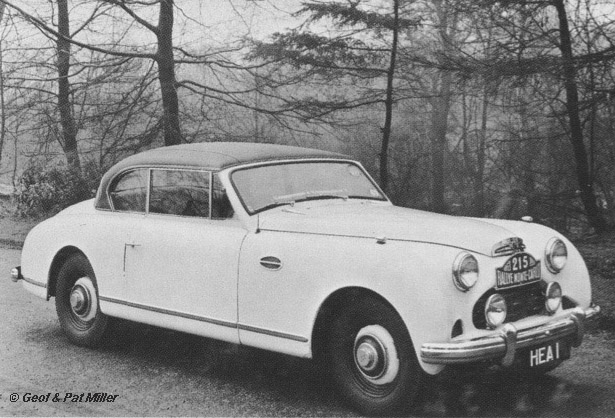
The Rally Interceptor photographed at Netherhall Avenue for the local West Bromwich newspaper.
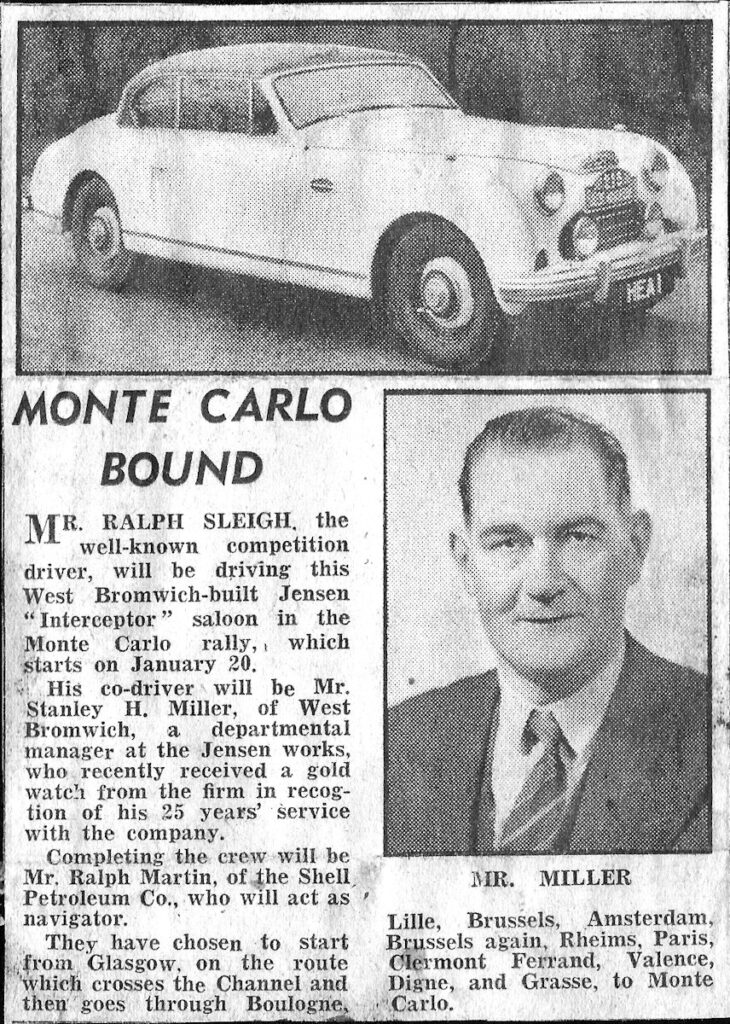
The West Bromwich local newspaper ran the story of Jensen Motors’ involvement in the Monte Carlo Rally.
With the car ready, Sleigh would pick up the car, and have it for a few days before the Rally was to start. This allowed him to get used to the car, and gather together the things he would be taking, along with those of Ralph Martin.
Since both Ralph Sleigh, and Ralph Martin lived in the home counties, the plan would be that Miller would meet up with them at Nottingham , and then all three would travel up to Glasgow together.
Monte Carlo Rally 1953 | Jensen Interceptors | Sunday 18th January
The Rally would start from Glasgow, Miller travelled up from West Bromwich to Nottingham and met up his fellow crew members. The three men had lunch at the Punch Bowl, and then shared the driving up to Glasgow.
Weather conditions were excellent, dry with a blue sky, although very cold. On one section of the drive up to Glasgow, the car hit ice and skidded. Miller and his compatriots agreed that once they were parked up at their hotel in Glasgow, they would redistribute the weight in the car.
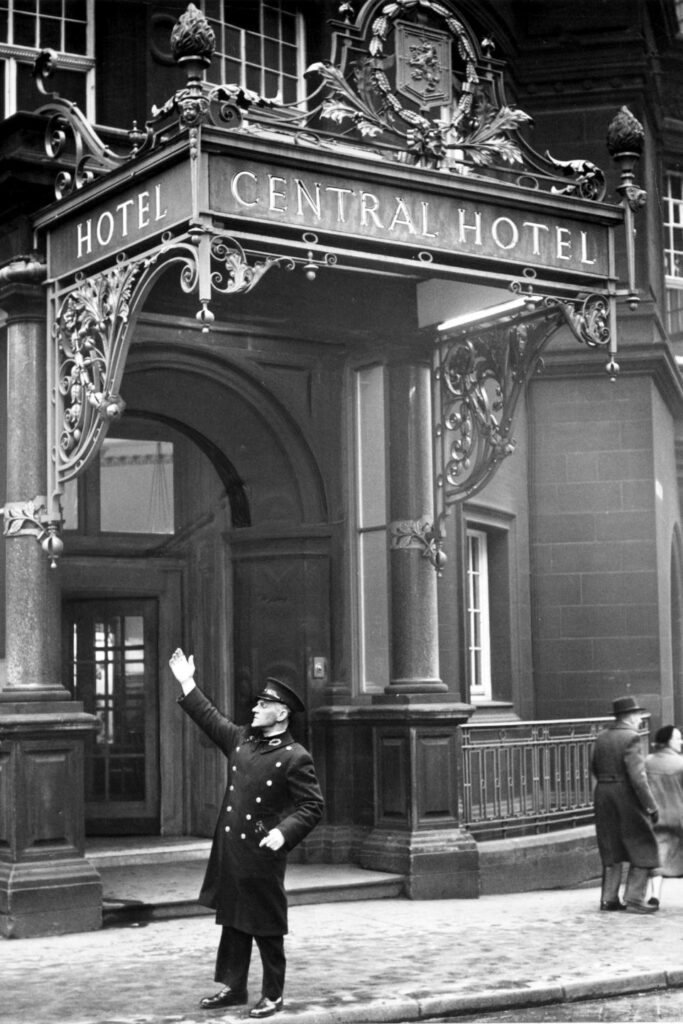
The impressive entrance to Glasgow’s Central Hotel. Photograph circa 1950s.
In the evening the three men dined at the Central Hotel, where they met Harry Sutcliffe, the well known rally driver, along with his wife, Pauline.
They had driven from Warrington and mentioned they had been met with a lot of fog on their journey. The Sutcliffes were also starting from Glasgow in a 356 Porsche. Miller writes in his diary,
“had sole, pheasant, sweet, and a bottle of claret.”
Monte Carlo Rally 1953 | Jensen Interceptors | Monday 19th January
Monday was used to get the Interceptor ready for the Rally. Miller tells us more in his diary,
“Took the car to the garage for grease and service, and then over to Dunlop for a tyre change, and then back to the garage again to have the car sealed [ according to Geof Miller this meant having the car checked by the garage to make sure there was no modifications that would disqualify it from the Rally].”
A Shell representative had invited the three men for a lunch at the Mecca Club, and after lunch they drove the car across to Lucas for horns and mirror [ according to Geof Miller, there was a control on the volume of the horn here in the UK, but on the continent the volume was allowed to be much louder, hence Lucas would either be converting the existing horns, or changing them over. The mirror may have been an additional mirror for the co-driver / navigator].
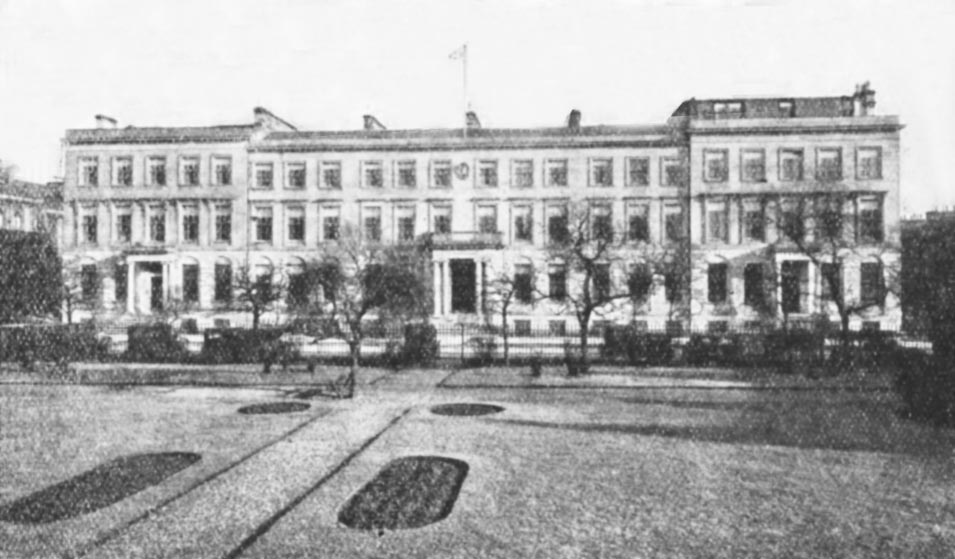
The RAC Club building at Blythswood Square, Glasgow
By lunch time, Miller drove to the RAC Club for check-in, and afternoon tea. Later in the afternoon, the three men took the car to Rossleigh where they fitted modified windscreen demisters, afterwards having an ‘official’ photograph of themselves with the car. In the evening, they had dinner at the RAC Club.
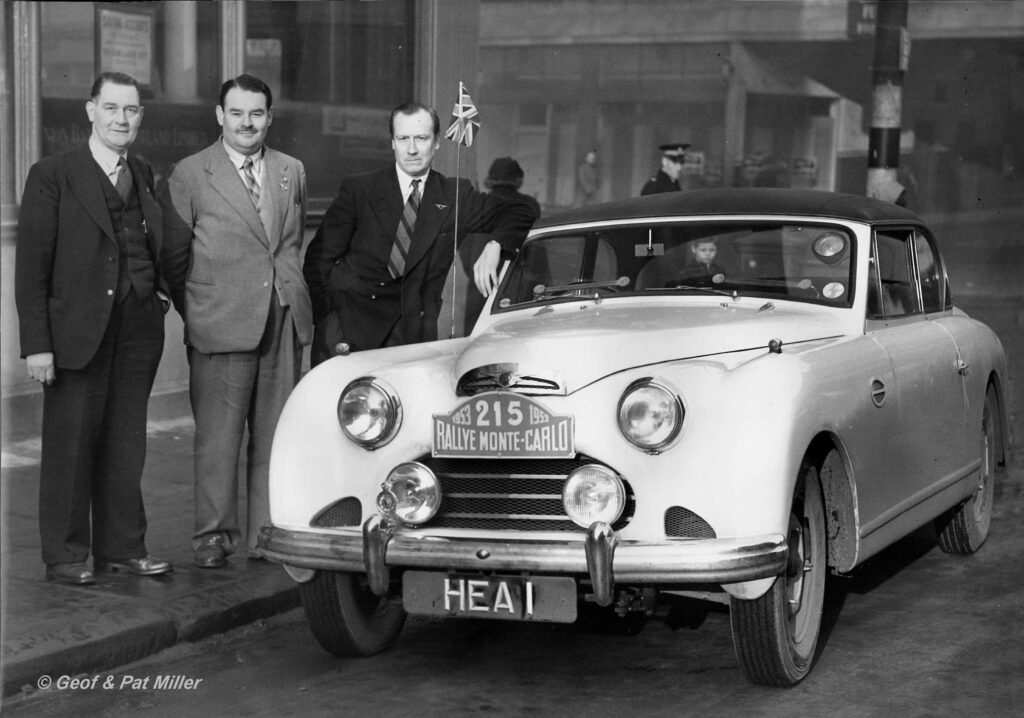
Stan Miller, Ralph Martin, and Ralph Sleigh standing next to the Interceptor. The Union flag remained on the aerial throughout the rally. The modified electric windscreen demisters can be seen, and an additional searchlight was also mounted to the upper passenger side of the windscreen. All three men wear winged Jensen staff badges on their lapels, with Miller undoubtedly giving Sleigh and Martin badges to wear for the photo.
Monte Carlo Rally 1953 | Jensen Interceptors | Tuesday 20th January
After breakfast on Tuesday morning, Miller took the Interceptor back across to Rossleigh to have the car washed and cleaned ready for the Rally. Afterwards, he drove the car back to the RAC Club on Blythswood Square and parked up the car in its designated place.

Cars parked up outside the RAC Club in Blythswood Square.
As was normal for the start of the Glasgow entrants to the Monte Carlo Rally, start off was just after 1.00 pm in the afternoon, with one minute intervals before the next vehicle set off. Everyone was eager for news of the prevailing weather, but were perhaps little surprised to learn that there was bad fog throughout the country.
That said, Miller and his co-drivers found conditions quite bearable until they reached Shap Fell, then they hit some bad fog and ice. Continuing to make good progress, despite the weather, they managed to reach Llandrindod with about 40 minutes to spare.
At Llandrindod, an Esso representative waved the cars to the Control Point and at the floodlit Automobile Palace, cars were refuelled from pumps and two-gallon cans. After refuelling, each competitor was given an Austin duster.
Leaving Llandrindod, the three men headed off towards Gloucester, en route to go through Oxford and then on down to Folkestone. Having not long left Llandrindod, the men viewed their first major accident, an MG overturned on the ice.
After a few hours driving, they had made it to London, Ralph Sleigh had actually driven all the way from Glasgow, and on down to London, but by now he was tired out, and so Miller took over for the final leg from London to Folkestone.
They arrived at Folkestone with 30 minutes to spare, and took the opportunity of having a pair of snow tyres fitted to the rear wheels before boarding the ferry.
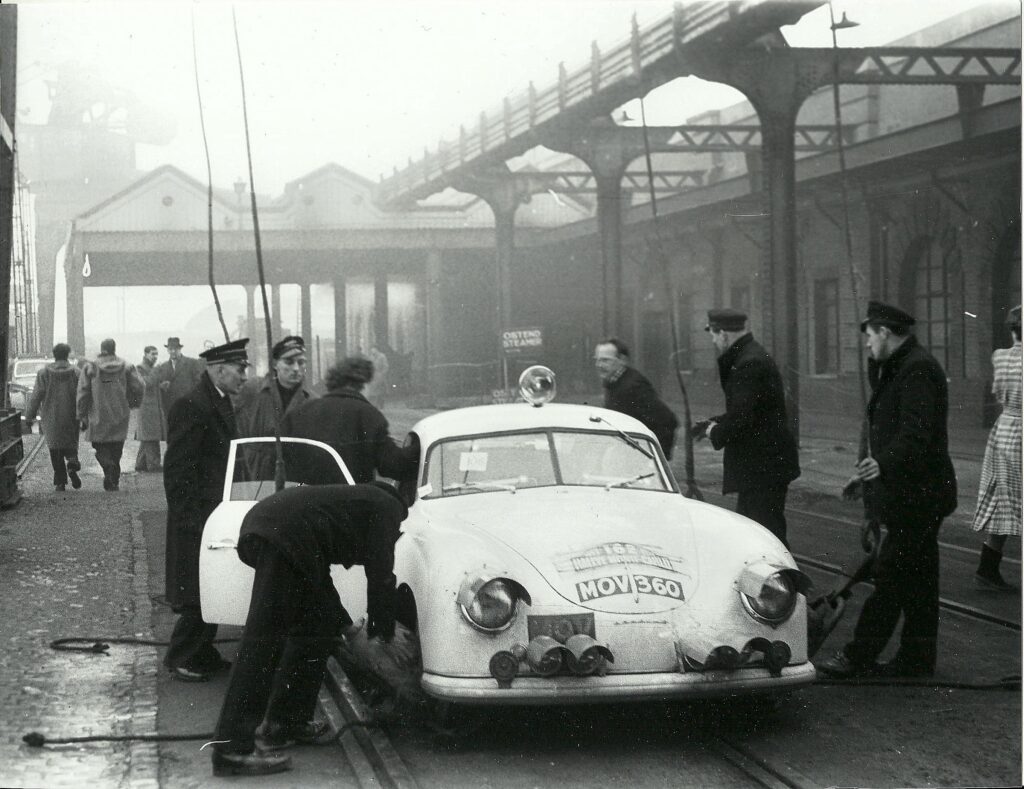
At Folkestone the cars taking part in the Monte Carlo Rally had to be hoisted aboard the ferry. This is the moment the Sutcliffes arrived. They have just got out of the Porsche as the workmen set up the hoisting ropes. The Interceptor arrived at Folkestone a little later.
The Interceptor was hoisted aboard the “Lord Warden” ferry in preparation for the voyage to Boulogne. Once aboard, the three men could have a relax, and a much wanted breakfast.
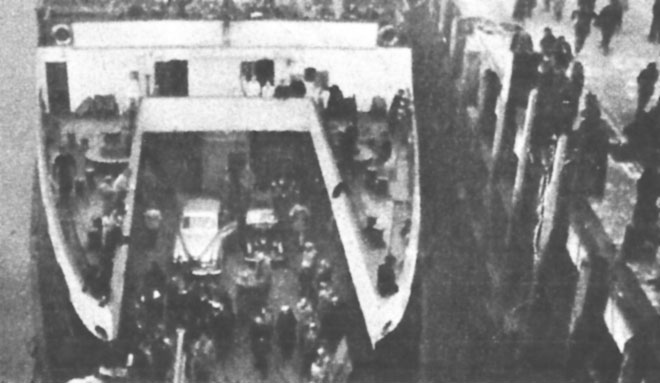
The “Lord Warden” ferry with rally cars aboard, ready to disembark at Boulogne.
It was a calm crossing, and the ferry arrived just after mid-day. The ‘Press’ Jensen had already arrived at Boulogne on an earlier ferry, and was waiting to watch the Rally cars disembark from the “Lord Warden”.
This was their first chance to see the hardtop Interceptor, waving at them as they went passed. This would be the last time the two Jensen crews would see each other until Fontainbleau.
From Boulogne, Miller continued as driver, heading down to Lille, he commented in his diary,
“Roads poor with soft shoulders”
Once in Lille, the men found the restaurant that had been booked for them, Miller writes that the men had a chicken dinner, with two bottles of wine, coffee, and liqueurs. Having finished dinner, they left Lille Control for Rheims, running into some very bad fog.
It was at this stage, that the Jensen came up behind a Sunbeam Talbot 90 (car number 227), with Imhof, Pierce, and the BBC presenter Raymond Baxter inside. The Jensen followed the Talbot in hot pursuit, until the Talbot turned off the road for a petrol stop, allowing the Jensen to speed on past.
Pierce would recount later in the Norfolk and Suffolk Journal,
“We stopped for petrol allowing Ralph Sleigh’s big white Jensen, who had been sitting on our tail closer than any brother, to go past; in half a mile from the filling station we caught him again, door open, floundering helplessly across the road and onto a light railway line which ran alongside the right-hand side of the road.”
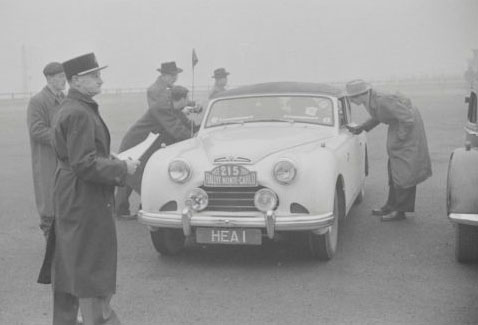
The Interceptor at Lille Control. Fog was coming down as can be seen in this image. Leaving the Lille Control it became much worse.
From Rheims they headed to Brussels, still in bad fog. Miller mentions in his diary about another victim of the Monte Carlo Rally which they passed, a Sunbeam Talbot, completely smashed up.
This was the Sunbeam Talbot of Tom Christie, and G.Menzies. They had slid on frozen tram-lines and hit a lorry in fog near Brustem. The car was completely wrecked, killing their passenger A.S.Buchanen.
Christies was shaken, but generally okay, but Menzies suffered broken ribs, and was taken to hospital. Christies would go on later to buy a Jensen 541S (see Museum Cars).
The Interceptor left Brussels in a four line racing start from a level crossing heading for Amsterdam.
Monte Carlo Rally 1953 | Jensen Interceptors | Wednesday 21st January
Wednesday morning was a foggy start, and Miller was driving. The Interceptor was heading back to Brussels, where the next Control Point was situated. Despite the fog, Miller made good time, and the three men stopped for lunch.
After leaving Brussels they would be heading for the next Control Point in Paris. Not long after leaving Brussels, Miller struck ice, but managed to regain control of the car.
It was on this same section of ice that the crew of the Interceptor saw a wrecked Jaguar MK.7 (another car that started from Glasgow). This was the car crewed by Bertie Bradnack, Truman, and Boshier. Apparently the Jaguar had slid on the ice and hit a tree. All the occupants were taken to hospital. Miller writes in his diary,
“Bradnacks and Boshier’s Mark 7 wrecked in ditch, appeared to have turned over.”
It would seem that the ice, and the wrecked Jaguar unhinged Miller slightly, as having stopped at the crash site, Sleigh took over the driving, and continued the drive to Paris. All three men would be looking forward to reaching Paris.
Monte Carlo Rally 1953 | Jensen Interceptors | Thursday 22nd January
The Interceptor made good time to the Paris Control, with Sleigh driving. They past through the Control Point without issue, with a police escort taking them out from Arc de Triumph and past the Eiffel Tower.
This was the only point throughout the Rally, where participants could put their foot down and screech around the streets of Paris. Once out of Paris, they were back to regulation speed of 50km.
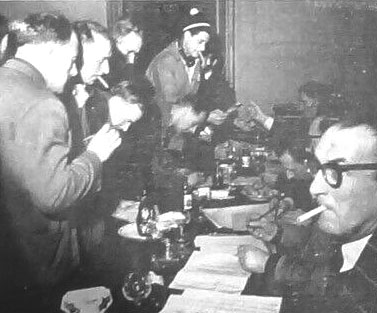
The hustle & bustle of the Paris Control, with participants getting their Road Books stamped by officials.
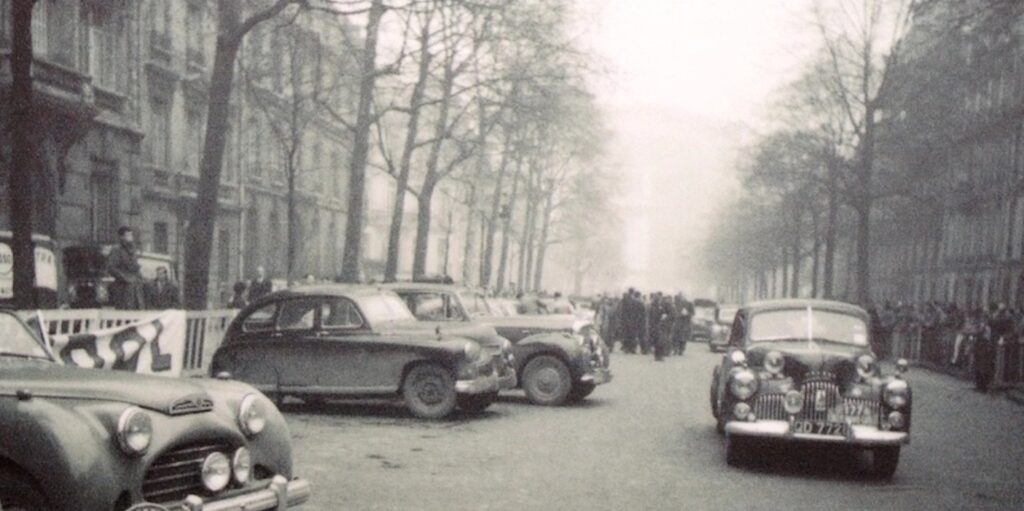
Rally cars in Paris. The “Road & Track” Press Interceptor to the extreme left of the photo. The car entry number ‘177’ was a Holden brought all the way over from Australia for the rally. This was manned by former squadron leader, and well known racing driver, Tony Gaze, along with his crew, Lex Davison, and Stan Jones. Tony Gaze always admired Jensen cars, and ended up buying one of the very first four-wheel-drive Jensen FF cars.
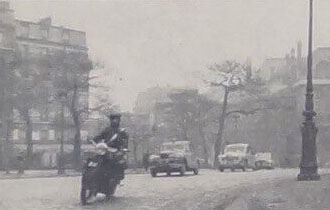
A French Gendarme takes participants through the streets of Paris at around 80km. This part of the Monte Carlo Rally was affectionately known as the ‘Grand Prix Of Paris’.
Then it was down to Fontainbleau. The weather was good, and Miller, and most other participants made it to Fontainbleau in just over 30 minutes.

The “Road & Track” loan Jensen ‘Press’ car at Fontainbleau. Press members on the Monte Carlo Rally carried a front plaque with white lettering on black. Those participating in the Rally carried the same shape plaque with white lettering on red.
At Fontainbleau, the crew saw the ‘Press’ Jensen, and gave them a wave, and a thumbs up to indicate all was well. Then it was a case of thundering down to Bourges. They made the 107 miles to Bourges in just two hours.
Sleigh took over the driving at Bourges, heading for Valence. Unluckily they hit fog almost immediately outside the city. Not long afterwards there was an electrical problem with the car.
Miller doesn’t tell us exactly what the nature of the fault was, however, he managed to fix the fault at the side of the road and then they continued on their way.
As the crew continued driving into the night, weather conditions worsened, along with the Control Points. There was packed snow at the Control making it difficult for the cars coming in and going out. Miller gives us a snapshot of the prevailing weather,
“Packed snow in the control & freezing so hard that the anti-freeze in screen washer froze on glass. Electric demisters very useful here.”
Outside of the Control Point, the crew of the Interceptor came up behind the blue & black Alvis with the three ladies aboard (Dorothy Stanley-Turner, Nancy Mitchell, and Rosemary Fotheringham-Parker).
Sleigh went to overtake the Alvis but misread the snow, causing the car to hit deep snow and come to a halt. The three men had to quickly disembark and dig the car out.
This was possible in part from Miller thinking ahead. Back at the factory, when he was considering the range of spare parts and tools for the Rally, he also decided to include two spades.
Spading away the snow was achieved in just over five minutes, but it did leave them tight to get to the next Control Point. Once on the move they managed to pick up time, and arrived at the next Control Point just in time, and left straight away again.
This part of the journey took them through Le Puy, over the 3500 ft pass of Le Pertuis. All was covered in frozen snow and ice. Surrounded by high mountains, the crew of the Interceptor had to navigate narrow roads winding along the edge of 1000 ft precipices with hundreds of hairpin bends.
Monte Carlo Rally 1953 | Jensen Interceptors | Friday 23rd January
Dawn rose with the Interceptor amidst the wonderous scenery of the central Alps. From Valence, they crew of the Interceptor would drive to Gap via the Col du Cabre (at 13600 ft), and then on down towards Nice.
With no time to stop and admire the scenery, Miller took a few photos while the car was on the move. Much of the fog that had plagued the journey, had dissipated, and there were blue skies.
That said there were still frozen road surfaces to be navigated with care. Obviously taking care also meant driving slower than the crew wished to, which meant times between the Control Points were close to allowable times.
They carried on over the ice covered Col de Leques, where there were multiple Control Points, all of which made losing marks easier.
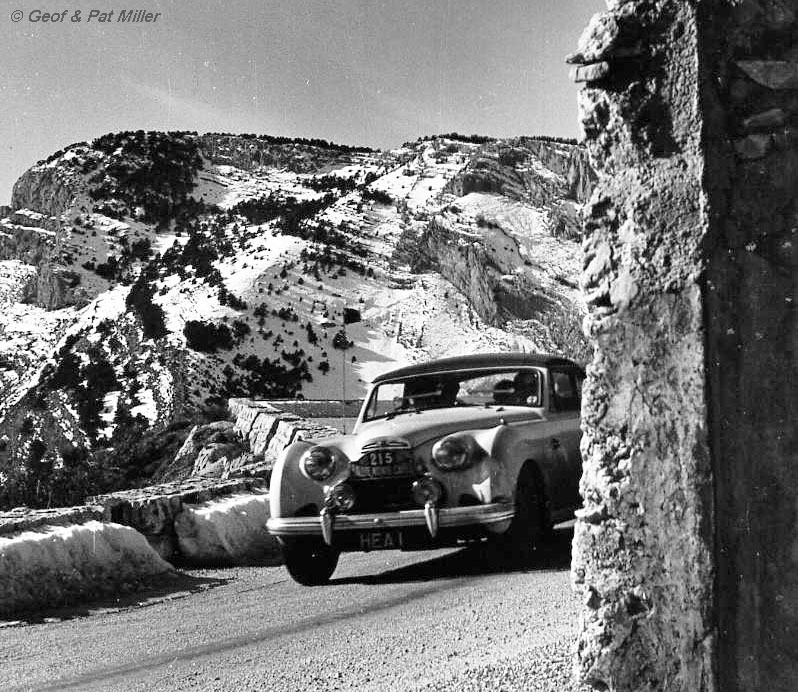
The Interceptor photographed by organisers while driving through the Alps.
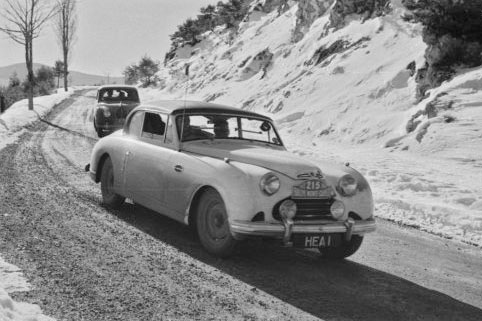
The Interceptor driving down from the Alps, towards Nice, another rally car close behind.
Eventually they passed the last Control Point on the Alps, and drove to Digne, and – thanks to melting snow and easier roads – a less concentrated travel down towards Nice. From Nice, a short run along to Monte Carlo in beautiful sunshine, and across the final Control & finishing point by late afternoon.
The ‘Press’ Jensen, containing Klemantaski, Reeves, and his wife, arrived into Monte Carlo at around the same time, and sought out the participating Jensen. After a quick chat, both parties went off to the hotel.
Miller states in his diary,
“Into Control where car was taken from us. Had a quick wash (not shave) and meal in hotel. Arranged to meet later at the Permanonery [this was presumably a bar in Monte Carlo].”
Monte Carlo Rally 1953 | Jensen Interceptors | Saturday 24th January
Although, passed the finish line, there was still the Acceleration & Brake Test to be undertaken, and this took place on the Saturday morning. Sleigh mentions he will take the test, but has difficulty with gear changes.
The A & B Test started with a standing start acceleration of 225 yards, and then stopping once over the electric timing strip, then immediately changing into reverse back over the strip, and forward again for 55 yards.
Sleigh wasn’t alone in poor gear changes, particularly the immediate change into reverse, and back into first for the 55 yards. All the drivers were extremely tired after the end of what was a gruelling Rally.
But, that was the whole point of the A & B Test, to get the 360 participants that had completed the Rally down to a final 100 or less to go forward for the final Regularity Test the following day.
Miller, Sleigh & Martin would find out later if they had gained a qualifying place in the Acceleration & Brake Test, but the reality was they knew they hadn’t.
Those that did qualify, then had to embark on a final eliminating Regularity Test, a 46 mile run over the Col de Braus above Monaco. There would be five Control Points along the route, and on the Sunday morning those that had qualified would be told in advance the speed they had to pass through the Controls at. Miller mentions,
“We make a circuit of the Cols in case, but have little hope in taking part.”
When the results of the Acceleration & Brake Test were given, 98 cars qualified to take part in the final Regularity Test , as Miller, Sleigh & Martin had predicted, the Jensen was not one of the qualifying cars.
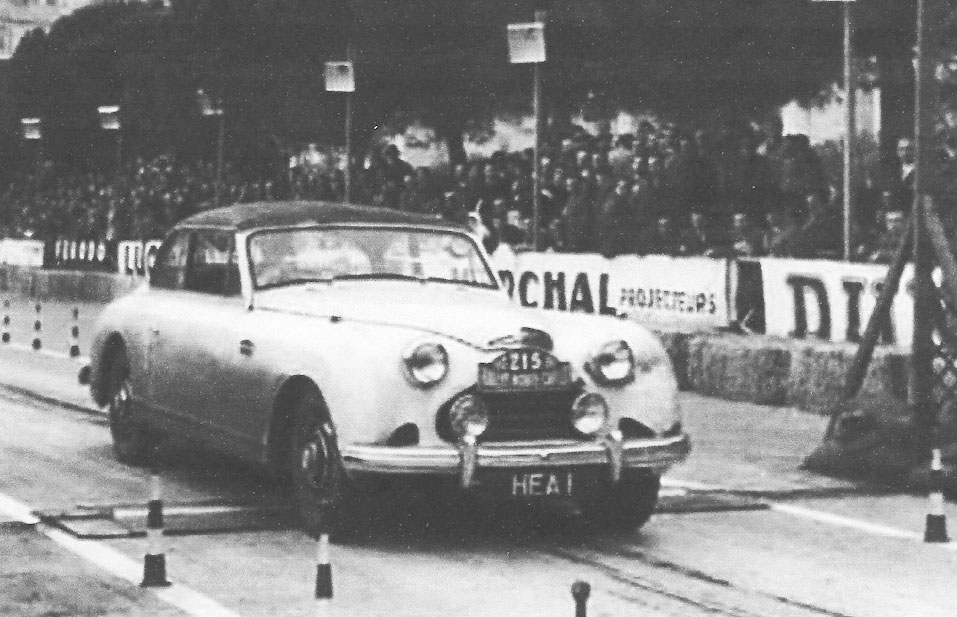
The Monte Carlo Acceleration and Braking Test, which took place not long after the participants had crossed the finish line of the actual Rally. Here the Interceptor is driving over the electric timing strip
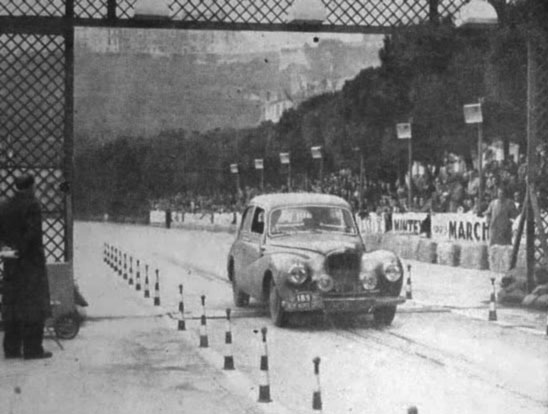
One of the various Sunbeam Talbots taking part in the Acceleration & Braking Test. This car was driven by Harper and Asbury. The photograph gives a good indication of the braking section with red and white poles each side and the finishing gantry.
With the tests out of the way, it was time to relax. The three men changed and attended a Shell sponsored cocktail party at the Hotel de Paris. Evening dinner was also taken at the Hotel de Paris, and the three men were joined by Ralph Sleigh’s father. Champagne was the drink of the evening.
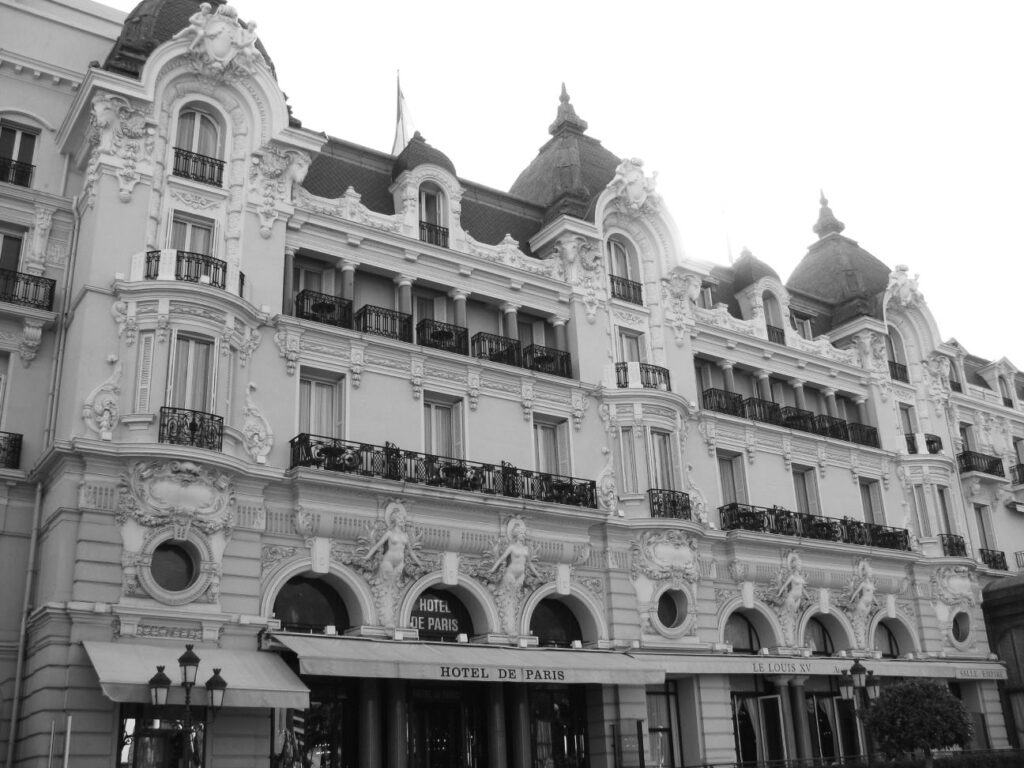
Hotel De Paris
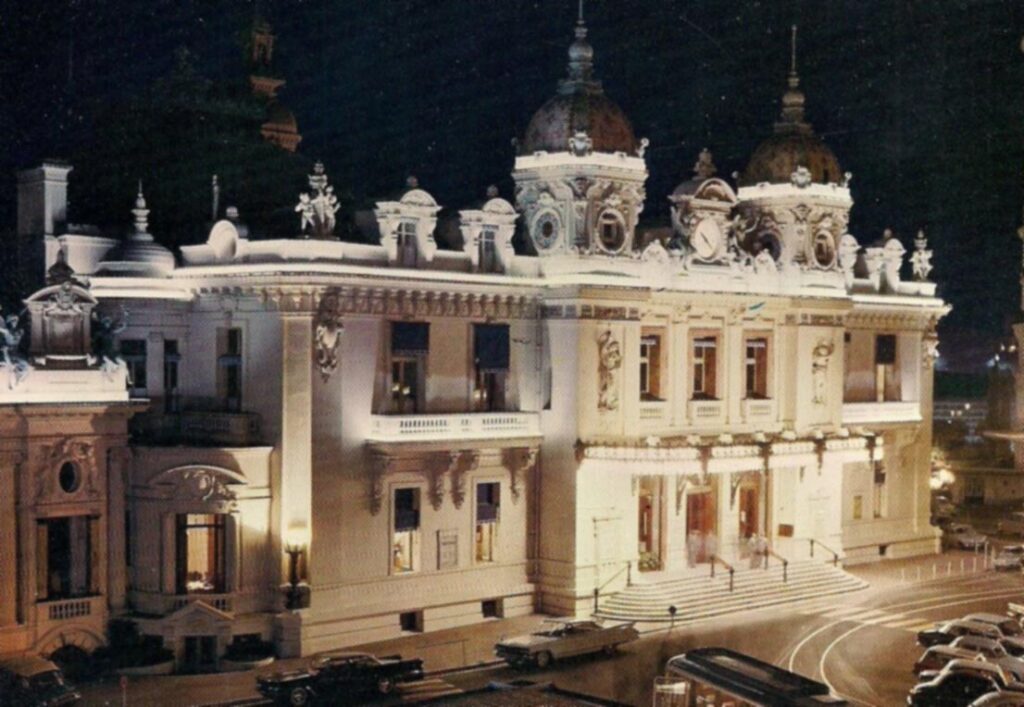
Casino Monte Carlo
After dinner the men left the hotel, and walked across to the famous Casino Monte Carlo, as the casino had been thrown open to all participants in the Rally. Once in the opulent Casino Monte Carlo they all indulged in a ‘flutter’ on the roulette tables, along with the consumption of a few brandies.
Luck was definitely on the side of Miller, as he actually left the casino with more money than he had gambled. After leaving the casino, the evening wasn’t over, they were off to the Ali Barber striptease club. Miller writes in his diary,
“more brandy, retire 2 am. Smoking again, about 8 cigarettes ! “
Monte Carlo Rally 1953 | Jensen Interceptors | Sunday 25th January
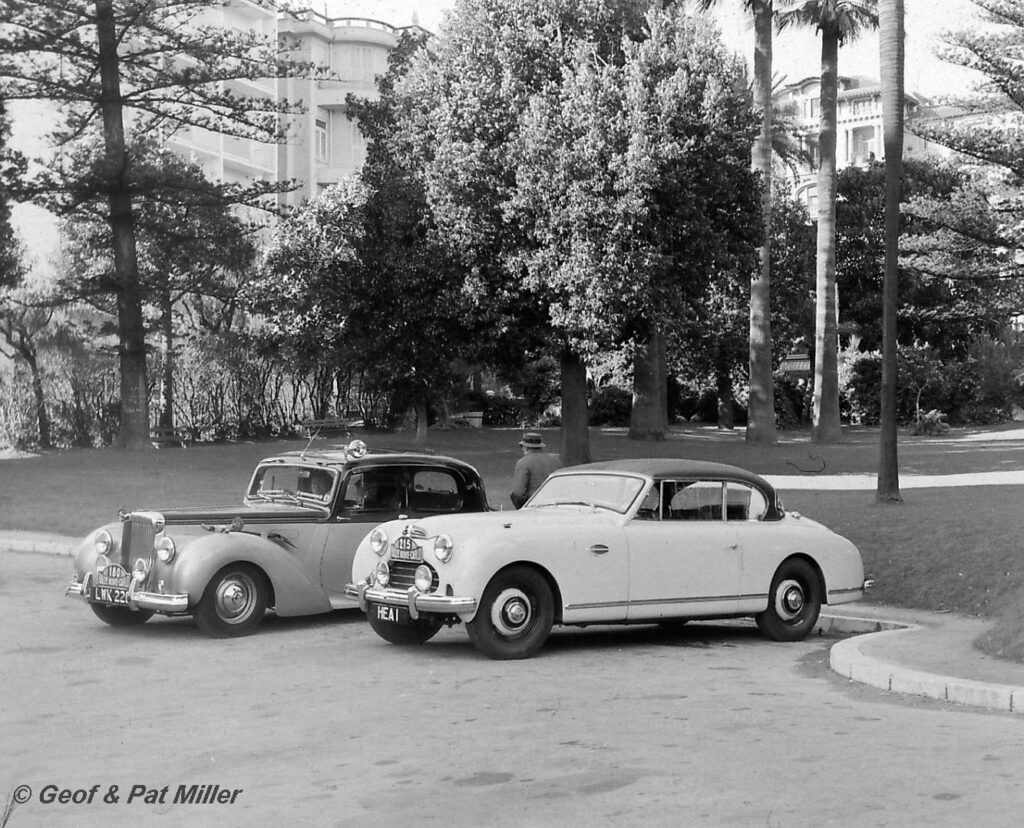
The Interceptor, cleaned up after its ordeal, and parked next to the Alvis bearing Rally Number ‘180’ (another Glasgow starting car). The car was being driven by two ladies, Dorothy Stanley-Turner, and Nancy Mitchell, and also accompanied by Rosemary Fotheringham-Parker, whom the two ladies called their travelling mechanic. The ladies created some interest as they always wore blue & black uniforms which matched the blue & black coachwork of the Alvis. Rosemary Fotheringham-Parker’s husband, Phillip, also took part in the same Rally, teaming up with Jack Kemsey, driving a Sunbeam Talbot.
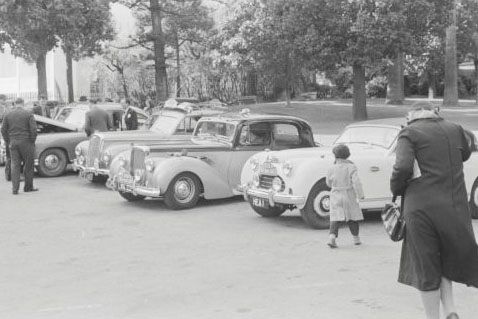
The same view as above, but a little later in the morning after further rally cars had arrived and parked up.
Monte Carlo Rally 1953 | Jensen Interceptors | Epilogue
The Sleigh, Martin & Miller crew had managed to complete the 1953 Monte Carlo Rally. Out of the 440 entries, just 346 cars finished. The Interceptor came in with a position of 195 out of the 346, along with two other cars (a Ford, and a Fiat 1400).
This was a very respectable placing for the three men, and a testament to the drivability of the Interceptor in the harshest of conditions. It was a great publicity scoop for Jensen Motors, probably only outstripped when motoring journalist, Michael Scarlett, decided to drive a four-wheel-drive Jensen FF up a ski-slope in 1968.
However, the Jensen brothers were not great brand publicists, and didn’t appear to make really good use of the Interceptor’s participation in the Monte Carlo Rally.
In the end, the Rally was won by Maurice Gatsonides/Peter Worledge in a Ford Zephyr. Unbeknown to many other participants, Gatsonides had spent four weeks of holidays lapping and perfecting the Col de Braus loop.

Maurice Gatsonide and Peter Worledge standing by their Ford Zephyr (Rally Number ‘365’) just after the prize giving.
For Stan Miller, Ralph Sleigh, and Ralph Martin, there would be no cups. However, each received a Monte Carlo Rally lapel badge, and a framed photograph of themselves next to the car. Each frame had a miniature replica of the main car Rally plates attached to the top.
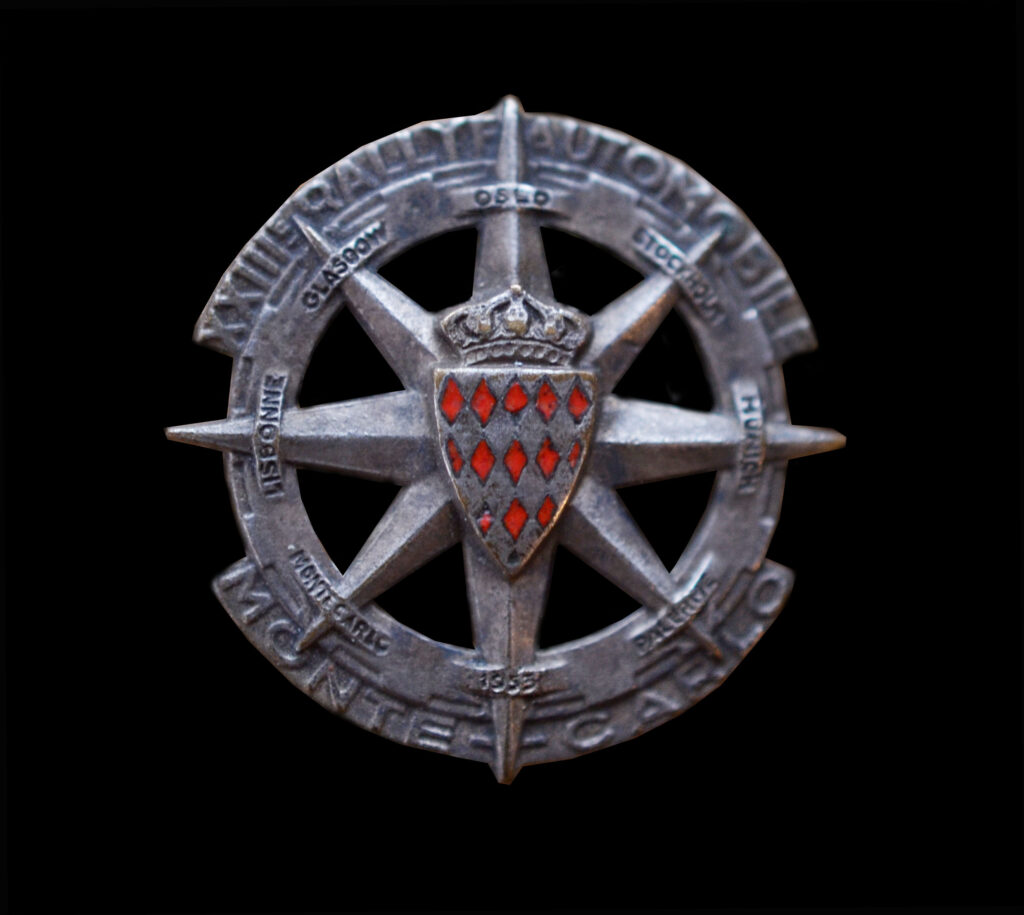
The Monte Carlo Rally lapel badge. Each participant received one.
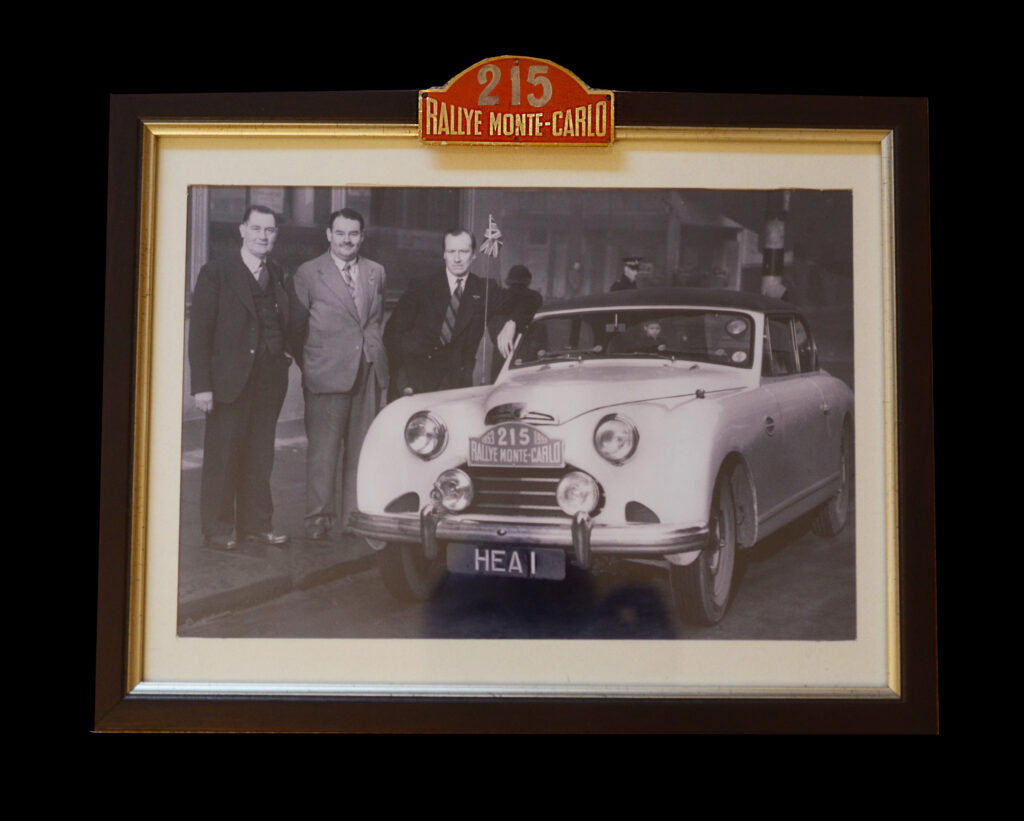
The framed photograph with miniature replica of the car’s Rally plates.
With the Rally at an end, it was time to head back to England. Once across the Channel, Miller dropped off Ralph Sleigh, and Ralph Martin at their respective homes, and then carried on up to West Bromwich.
Being the weekend by this time, Miller kept the car, taking it back to the factory on the Monday. His son, Geof, was keen to hear all the stories about the Rally, and even had the chance to go off for a drive in the car (still in rally spec) along with his dad. The drives out included driving through Netherhall Avenue, and taking photographs of the Interceptor where it had been photographed before the Rally.
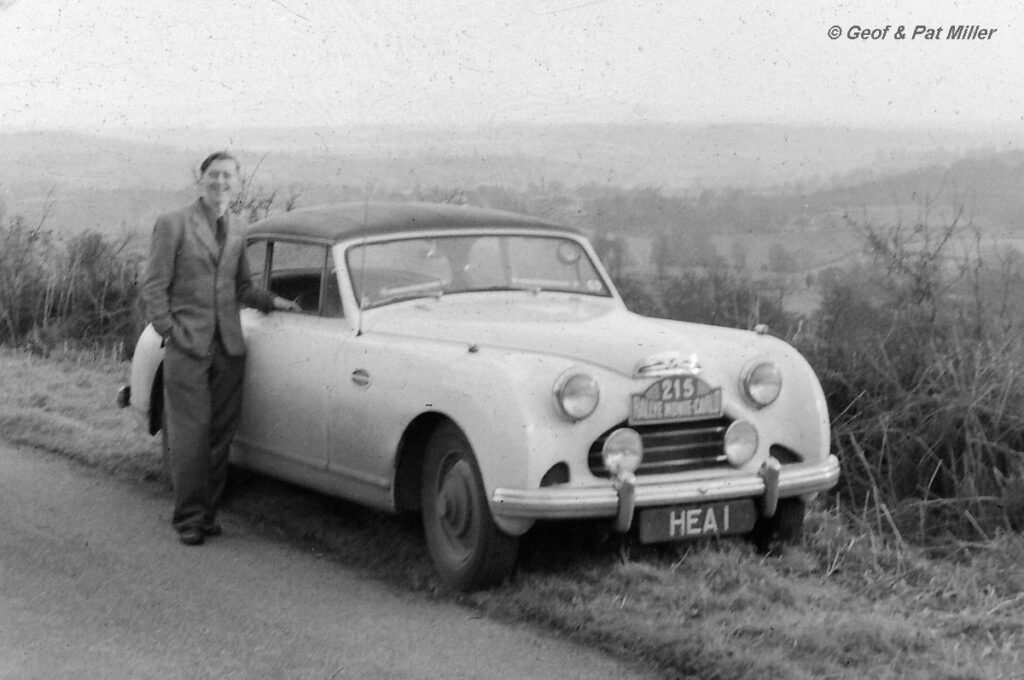
Geof Miller standing next to the Monte Carlo Rally Interceptor, the car still in full Rally spec, and remaining uncleaned from the return journey.
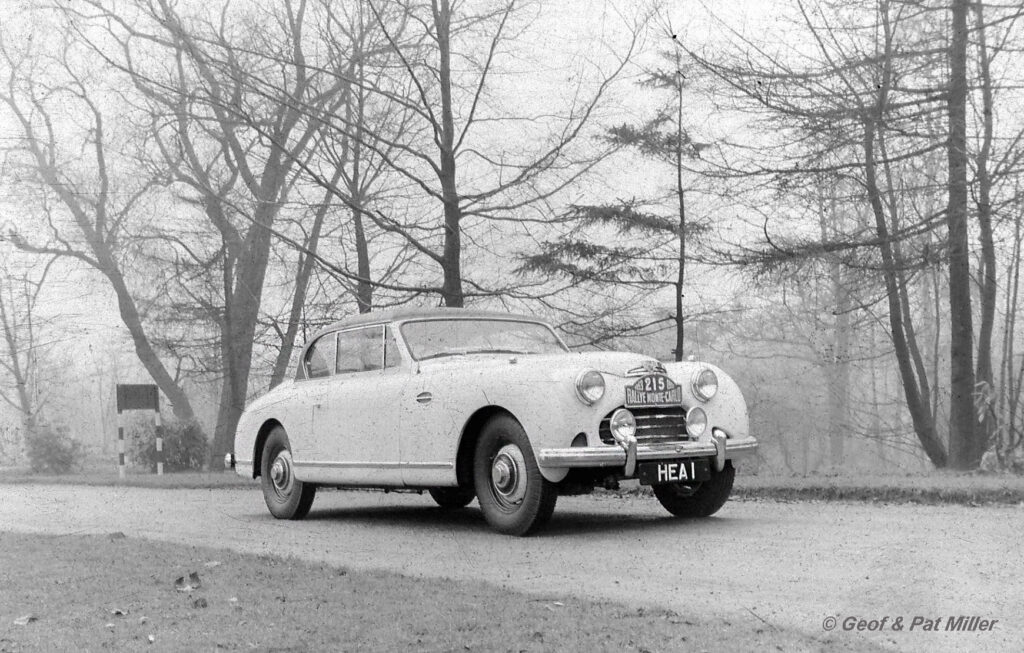
Now cleaned up, the ‘Rally Interceptor’ was driven by Miller and his son, and parked in the same spot on the Netherhall Avenue, where it was photographed just before the Rally.
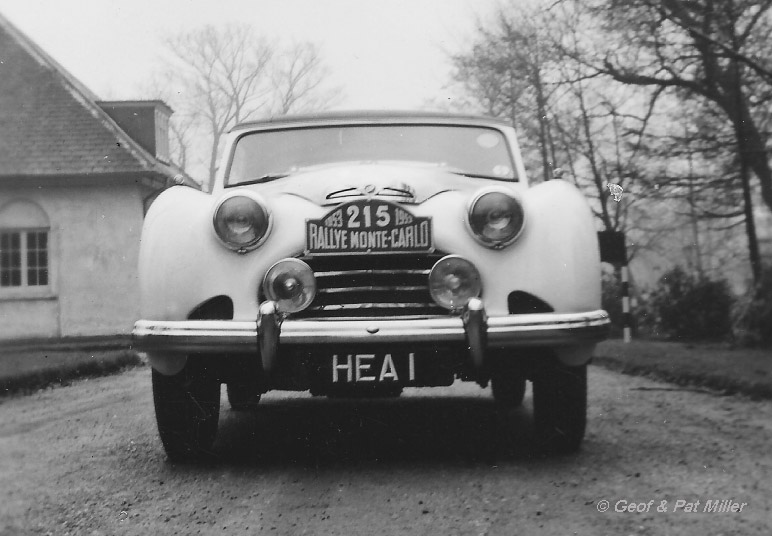
Another photograph of the ‘Rally Interceptor’ photographed by Stan Miller at Netherhall Avenue. The building to the viewers left still exists today.
Just two months after completion of the Monte Carlo Rally, ‘HEA 1’ was back out taking part in the RAC Rally during March. After this, it is believed the ‘HEA 1’ was removed and retained by Jensen Motors, and the car sold off.
Monte Carlo Rally 1953 | Jensen Interceptors | Survivals
Jensen Interceptor ‘HEA 1’
We still do not know for sure which chassis number this car was. However, looking at the chassis numbers and excluding those cars manufactured after 1952, or in convertible form, or ones where the colours do not confirm, seems to narrow the cars down to two, chassis number ’13’ or chassis number ’14’. If it was chassis ’13’, then it would have made sense that Jensen Motors would have kept back the ‘HEA 1’ registration, and put ‘GEA 700′ on at the time of sale.
However, a third car could just possibly be a contender as the 1953 Monte Carlo Rally car. This is chassis ’27’. We do not know anything about this car in terms of paint colour or trim. But Calver’s Genome confirms this car was delivered to Rossleigh on 5th January 1953. Was this a different car for one of Rossleigh’s customers, or the car used for the Rally.
Chassis ’13’
Registered with the number ‘GEA 700′. This car was last recorded as a survivor in 1996, at which time it was owned by the former Jensen Owners’ Club historian, Keith Cerino.
Chassis ’14’
The Jensen Museum doesn’t hold any information about the survival of this car.
Chassis’27’
The Jensen Museum doesn’t hold any information about the survival of this car.
Jensen Interceptor Convertible ‘GEA 447’
Chassis number ‘7’, and Alan Jensen’s personal car during 1952.
Chassis ‘7’
The Jensen Museum doesn’t hold any information about the survival of this car.
If you have enjoyed this feature, you may wish to read our feature on the Life & Times of Stan Miller: https://www.jensenmuseum.org/jensen-motors-workshop-supervisor-life-times-of-stan-miller/
Monte Carlo Rally 1953 | Jensen Interceptors
ACKNOWLEDGEMENTS: Jensen Museum | Geof & Pat Miller | John Staddon, CV8 Registrar, Jensen Owners’ Club | Norfolf & Suffolk Journal and Diss Express, February 1953 editions.
COPYRIGHTS: Jensen Museum | Geof & Pat Miller
ADDITIONAL INFORMATION: If you have any additional information about this feature, please contact us at archive@jensenmuseum.org or telephone on: +1694-781354
We hope you have enjoyed this feature.
If you would like notification of when new features are added to the Museum website, then why not subscribe.
It’s free, and takes just a couple of minutes. Simply press the Subscribe to our mailing list link below.